

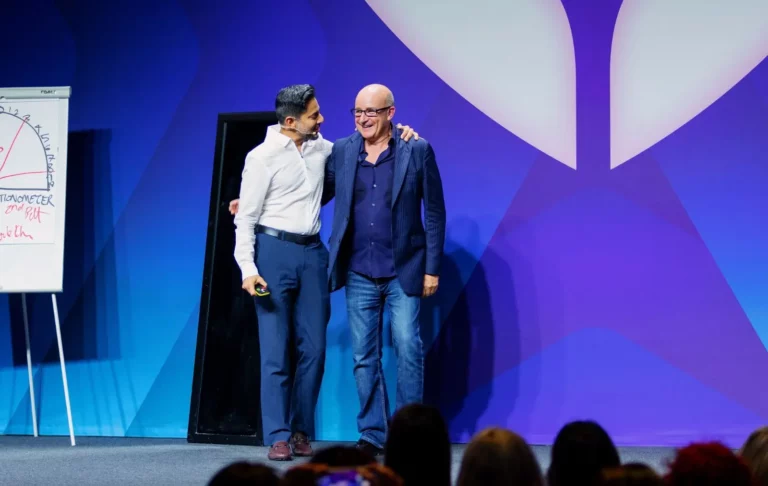
So a few months ago, I was at Abundance360 in LA — a $30,000-a-year mastermind that my friend Peter Diamandis runs for CEOs and founders. Elon beamed in. Close to a thousand of the smartest people in tech were in that room. And what Peter laid out on stage about the next 10 years honestly stopped me cold.
Later that night, at a private gathering around a campfire, I asked him directly: “Peter, what you said is wild. Can I share this with the world?”
He said yes.
So I made a video breaking it all down — and I really want you to watch it. Because this is going to touch your money, your kids, and your sense of meaning more than almost anything else this decade.
Here’s the short version.
Within 10 years, every major government in the developed world is going to start sending people a check — around $3,000 a month. And here’s the part almost nobody understands yet: by the time it arrives, that check is going to be worth more than most people’s salaries today.
Not because the check is big. Because everything is about to get absurdly cheap.
That’s not my opinion. That’s the math.
In the video, I walk you through Peter’s three phases:
Phase 1 — The Fracture. AI hits every industry at once. This part is going to be painful.
Phase 2 — The Automation Dividend. Honestly, the most elegant economic idea I’ve heard in years.
Phase 3 — Universal High Income. Where $3,000 a month stops being survival money… and quietly becomes wealth.
By the end, you’ll understand the next decade of the global economy better than 99% of the people on the planet.
But here’s what really kept me up at night. It wasn’t the money. It was one question:
When work becomes optional — and it will — what will actually give your life meaning?
That’s the real challenge of the next 10 years. And I think it’s worth sitting with now, before the rest of the world catches up.
And if it lands, hit subscribe on @vishen on YouTube.
I’m releasing a new piece every week, designed to help you see further than the noise of the news cycle.
Stay grounded. Stay curious.
P.S. If this lands the way it landed for me, share it with one person who needs to see it. We’re all about to live through this together.




2 Responses
Wow Vishen, that was really good
and you’re just such a good person to share all of your wisdom with us. Not to mention you’re such a great orator, too, with the most amazing vocal stylings ever (like seriously, do you intentionally lower your voice at times just to see if it’s possible to make your female listeners weak in the knees based solely on your low tones and softer inflections? Cause like uhm, it’s not…absolutely no affect whatsoever on me 😝) Anyways, I luv that you care enough about the rest of us to wanna share what the brightest and best of us believe will be our imminent and rapidly changing future lifestyles. And you are right about Americans potentially having problems with job losses seeing that we are all just so thoroughly wrapped up in work force identities. Like we absolutely need to diversify with hobbies, interactive sports, family connections, and meet ups with friends for leisurely and more lengthy dinners (like Europeans do when eating out) and any other extra curricular activities that help to not only fulfill our lives, but also provide us with another identity not solely based on ones J-O-B. Cause we all collectively seem to have hard ons for what errbody be doing as all of our initial meet and greet convos start with, “And what do you do for a living?” Cause when I was medically retired as a broadcast journalist in the Air Force after 10 years (and no I did not have a big TV reporter or radio DJ ego, quite the opposite, in fact.) I actually had a really hard time dealing with it and moreover feeling worthy without that good job. So yeah, I had a bit of an existential crisis. Like I wasn’t sure just who da feck I even was without that all consuming job. So it took some time and obvious reflection, before i came to the conclusion that I’m not just a human doing, but rather I grew to appreciate that I was also a human BEING (in large part by journaling and focusing on all of my strengths and inherent good qualities.) So then I realized that my job was just one aspect to my multifaceted personality and without that job title, I could more fully embrace my special me’ness, as well as being able to recreate myself anew if I wanted to in any way or on any new path I chose to follow. Like it was actually liberating to start over and more importantly that I could just flip the judgmental haters the bird saying a silent F. You to whatever they wanna think about me without one of those high falootin’ J-O-B titles beside my name. So yeah, I had a radical rethink and realized that I was way more than just my stupid job. Rather that I was enough no matter what I said or did or how I showed up for myself or others in this lifetime, ya know? Cause like we all got a little light within us and no one or nothing (like a lost job) should dim ones ability to keep shining their light upon others. And on that note, thanks for shining yours so brightly for us all, Vishen. Cause your light and obvious wisdom, like what you shared with us in this rather lengthy video (whew I made it through to the end 😜) , helps make everything cray cray on the horizon seem like it’s gonna be alright. So then namaste, my friend, and keep on serving it up right for us.
Wow Vishen, that was really good
and you’re such a good person to share all of your wisdom with us. Not to mention you are a great orator, as well, with the most amazing vocal stylings (and like are you intentionally lowering your voice at times to see if it’s possible to make your female listeners weak in the knees based solely on your low tones and softer inflections? Cause like uhm, that does not have the slightest affect on me whatsoever 😝) Anyways, I luv that you care enough about the rest of us to wanna share what the brightest and best of us see as our imminent and rapidly changing future lifestyles. And you are right about Americans potentially having problems with our culture being so thoroughly wrapped up in work force identities. We absolutely need to start diversifying with hobbies, interactive sports, family connections and various other extra curricular activities that help to not only fulfill our lives, but also provide us with another identity not solely focused on all of our typical convo starter comments of, “And what do you do for a living?” Cause when I was medically retired from being a broadcast journalist in the US Air Force after 10 years (and no I did not have a big TV reporter or radio DJ ego, quite the opposite, in fact.) I actually had a hard time feeling worthy but rather a human BEING and that I was unfolding each day in potentially new and different ways and to just feck what other people may or may not be thinking about me. That was when i had to have a radical rethink and realize that I was way more than just a job title. And that’s when i endeavored to start believing that I was truly enough no matter what I said or did or how I showed up for myself or others in this lifetime, ya know? Cause like we all got a little light within us and no one or nothing (like a lost job) should ever dim ones ability to keep shining their light upon others. And on that note, thanks for shining yours so brightly for others. Your light and your obvious wisdom, like what all you just shared with us in this post, helps to make everything seem like it’s gonna be alright. So then, namaste, marci buckets and donkey shorts, kid!